When you trade on a platform like Binance, Bybit, or OKX, you are likely trading a product that doesn't exist in traditional finance: the Perpetual Futures Contract ("Perp"). This innovation, pioneered by BitMEX in 2016, revolutionized crypto trading and created the 24/7 leverage casino that now dominates the industry.
Unlike standard Futures contracts (like Oil or S&P 500 Futures) which have expiration dates and require "rolling" to maintain positions, Perpetual contracts run forever. You can hold a leveraged position for months without worrying about contract expiry. This convenience is why Perps have become the dominant trading product in crypto.
But this creates a mathematical problem: What keeps the price of the Perpetual Contract ($BTC-PERP) equal to the price of real Bitcoin ($BTC-SPOT)? Without an expiration forcing convergence, the two prices could drift apart indefinitely.
The answer is an elegant mechanism called the Funding Rate.
1. The "Funding Rate" Explained
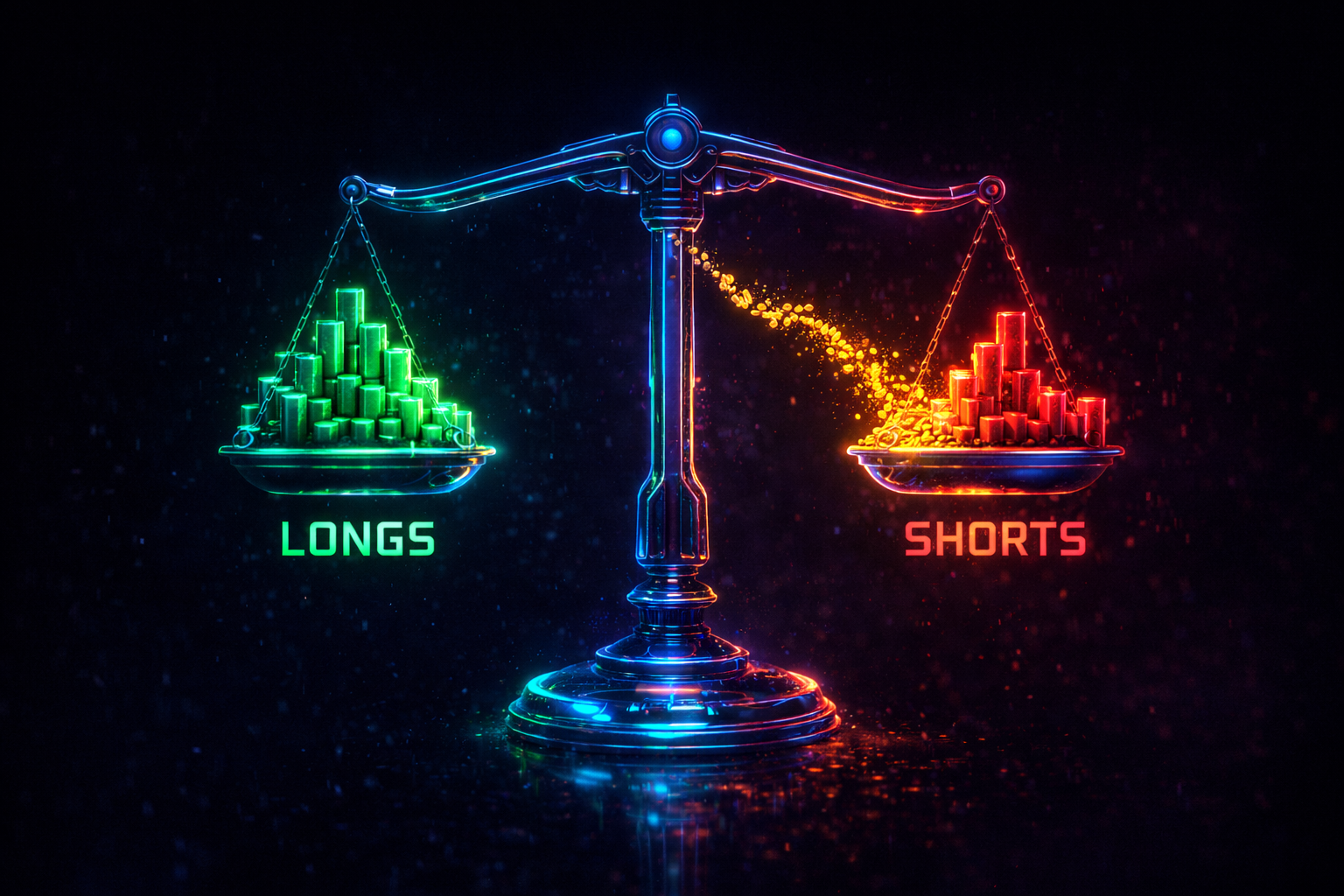
Imagine a game of tug-of-war between Longs (Bulls) and Shorts (Bears).
If everyone wants to buy (Long), the price of the Perp Contract rises higher than the Spot price. To fix this, the Exchange forces the Longs to pay a tax to the Shorts. This encourages some Longs to close, and Shorts to open, balancing the price.
How to read the Funding Rate:
- Positive Rate (e.g., +0.01%): The market is Bullish. Longs pay Shorts every 8 hours. If you are Short, you get paid to hold the position.
- Negative Rate (e.g., -0.01%): The market is Bearish. Shorts pay Longs.
- Danger Zone: If Funding hits high levels (e.g., +0.1%), the market is overheated. A "Long Squeeze" crash is likely to flush out the leverage.
2. The Liquidation Engine
In traditional finance, a "Margin Call" is a polite phone call or email from your broker asking you to deposit more money within a few days. In Crypto, liquidation is a violent, automated execution that happens in milliseconds without any warning or human intervention.
Exchanges use a Liquidation Engine—an automated system that monitors every leveraged position in real-time. If your account equity falls below the "Maintenance Margin" threshold:
- The engine immediately takes control of your position.
- It force-sells your entire position at Market Price—regardless of slippage or market conditions.
- It charges a "Liquidation Fee" (typically 0.5-1%) on top of your losses.
- Any remaining margin after covering the position goes to the exchange's "Insurance Fund."
The Cascade Effect: When a large Long position gets liquidated, the engine's forced selling drops the price. This price drop triggers the liquidation of other Long positions that were just above the threshold. Their liquidation drops the price further, triggering more liquidations. This chain reaction causes the infamous "Flash Crashes" where Bitcoin can drop $2,000-5,000 in a single minute—often recovering just as quickly once the liquidation cascade exhausts itself.
Understanding this mechanism is crucial: during high volatility, your stop loss might not save you if price gaps through it during a liquidation cascade. Position sizing and conservative leverage are your only real protection.
3. Maker vs. Taker Fees
To be profitable, you must understand how exchanges charge you. It is not flat.
- Maker (Limit Orders): You add liquidity to the order book. You place an order "below" the price and wait. Fees are usually low (e.g., 0.02%).
- Taker (Market Orders): You take liquidity. You want in NOW. Fees are much higher (e.g., 0.06%).
Lesson: Patience pays. Using Limit orders instead of Market orders can save you thousands of dollars in fees over a year.
4. Not Your Keys, Not Your Coins
A Crypto Exchange is a centralized database. When you deposit Bitcoin, you are giving it to them. You essentially have an "IOU" (I Owe You) displayed on your screen.
If the exchange goes bankrupt (like FTX), your money is gone. Therefore, Exchanges are for Trading, not for Saving. Move your profits to a cold wallet.
Summary
Crypto Exchanges are incredible technological feats—financial infrastructure that would have taken traditional institutions decades to build, created in just a few years. They offer 24/7 access, instant account creation, high leverage, and the ability to trade dozens of assets from your phone.
But make no mistake: these platforms are designed to extract value from impatient, overleveraged traders. The Funding Rate mechanism, the Maker/Taker fee structure, the Liquidation Engine—all of these systems generate revenue for the exchange at the expense of traders who don't understand the rules.
To win in this environment, you must understand the mechanics better than the average participant. Use Limit orders instead of Market orders. Watch the Funding Rate for sentiment extremes. Size your positions to survive liquidation cascades. And never forget: Not your keys, not your coins. The exchange is a trading venue, not a savings account.